How do you know you are actually resting?
Many of us were taught that rest is something you earn.
After you’ve done enough.
After you’ve achieved enough.
After everyone else is sorted.
But your body doesn’t work that way.
Rest isn’t laziness.
Rest is biology.
Your nervous system requires periods of safety and downshift to regulate hormones, support digestion, stabilise mood, restore energy, and maintain long-term resilience.
In clinic, I often talk about “rest and digest.” That’s because your body’s repair processes switch on most fully when you feel safe enough to soften.
This guide will help you:
Understand what rest actually is
Recognise the difference between rest and “switching off”
Learn simple ways to support your body into repair mode
Identify what real rest looks like for you
What Is Rest?
Rest is not just stopping.
Rest is any state that allows your body to move out of defence and into repair.
A simple definition:
Rest = a state where your body no longer feels like it has to fight, fix, prove, or perform.
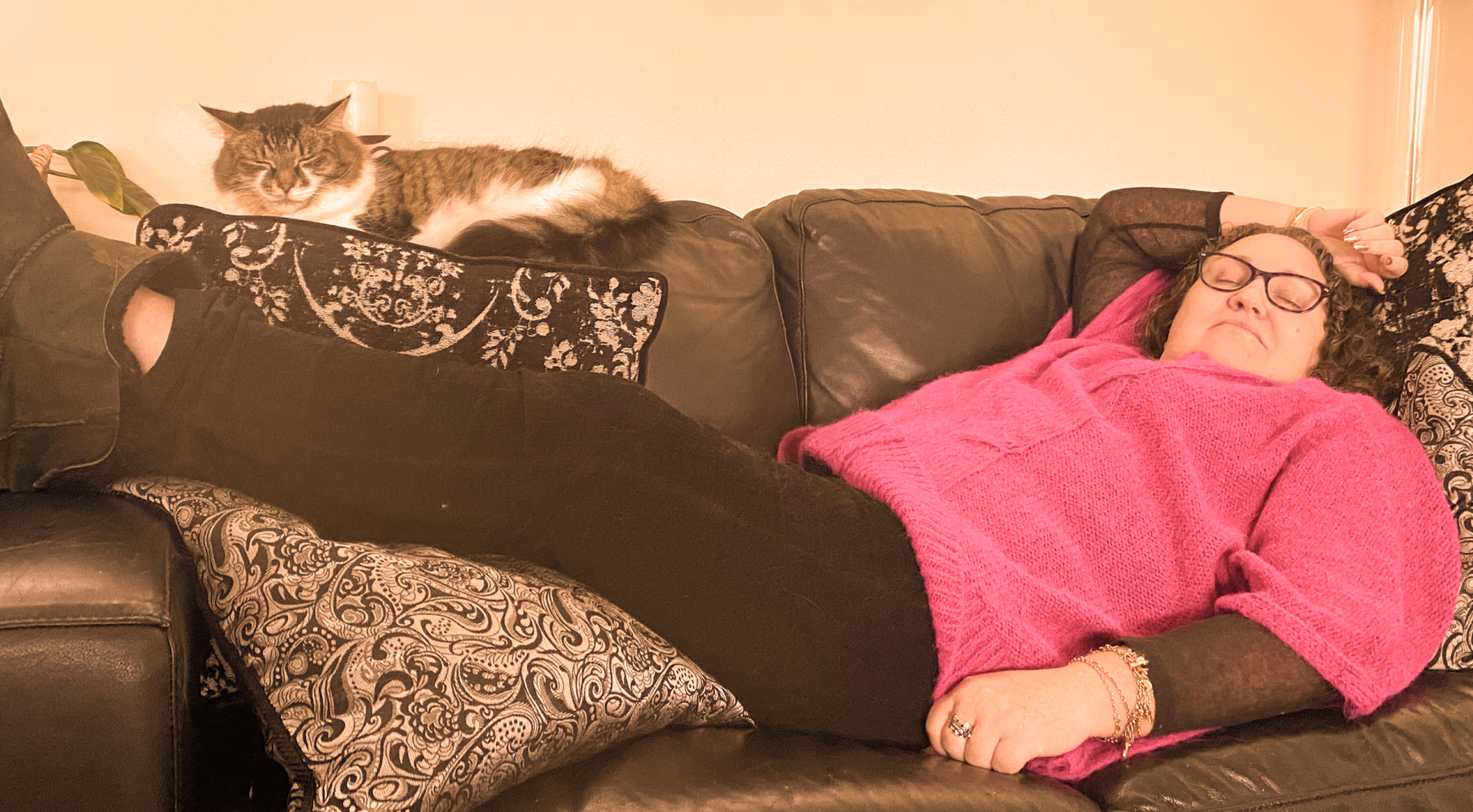
You can be lying on the couch and not resting — if your mind is racing and your jaw is clenched.
You can be walking slowly in nature and resting deeply — if your breathing is soft and your whole system has downshifted.
The activity matters less than the state you’re in while doing it.
Why Rest Is So Important
When your nervous system is in stress mode, your body prioritises short-term survival functions:
Alertness and scanning
Muscle bracing
Blood sugar mobilisation
Quick energy over long-term repair
When you shift into rest mode, your body can redirect resources toward:
Smoother digestion
Tissue repair and recovery
Hormone regulation
Immune function
Clearer thinking and steadier mood
When someone feels stuck in “go mode” for too long, it can show up as:
Digestive discomfort or bloating
Feeling wired but exhausted
Sleep disruption
Sugar cravings
Jaw, neck, or shoulder tension
Hormonal symptoms that feel more intense premenstrually or during perimenopause
This isn’t a personal failure.
It’s often a sign your system has been carrying more than it has had space to process.
A Reflection: What Is “Active Rest”?
I was recently reflecting on something I call active rest.
Sometimes I can be organising, researching, gardening, or creating — and it feels genuinely restorative.
Other times I’m doing almost the exact same thing… but it feels tight, urgent, driven.
The difference isn’t the task.
It’s the internal state.
Over time I’ve learnt to ask:
Am I curious right now?
Am I enjoying the process?
Or am I trying to get to the end?
Is my body soft — or braced?
If I’m relaxed, breathing, present, and engaged — that can be active rest.
If I’m rushing, clenching, multitasking, or proving something — that’s output mode.
Active rest is movement without pressure.
Creation without depletion.
Doing without bracing.
That distinction has changed how I relate to “being busy.”
Rest Has Layers: 4 Types of Rest
Most people try to fix exhaustion with sleep alone.
But humans need different kinds of rest.
1. Physical Rest
This is when your muscles are no longer preparing for action.
Examples:
Quality sleep
Lying down for 10 minutes
Legs up the wall
Gentle stretching on the floor
Choosing a lighter training day
Taking a slower walk instead of a power walk
Signs it’s working:
Your jaw softens
Shoulders drop
Belly isn’t held in
You sigh spontaneously
You feel pleasantly heavy
Physical rest is particularly supportive if you train hard, carry chronic tension, or notice your energy shifts across hormonal phases.
2. Nervous System Rest
This is the shift into:
“I don’t need to fight or fix.”
You may still be doing something — but your body feels safe.
Examples:
Sitting in the sun without your phone
Slow breathing with a longer exhale
Listening to music with eyes closed
Being with someone you feel at ease with
A warm shower where you aren’t planning the next task
Signs of nervous system rest:
Breath drops lower
Hands and feet warm
Thoughts slow
Urgency reduces
If you finish something and feel buzzy or wired — even if it looked relaxing — your system may not have fully downshifted.
3. Mental Rest
Mental rest is when your brain stops solving and scanning.
For many people, this can feel unfamiliar at first — especially if you’re used to constant input.
Examples:
Staring out a window
Watching the ocean without analysing
Slow journaling without trying to “figure it out”
Sitting in silence for five minutes
Folding clothes slowly without multitasking
Mental rest is not usually:
Rapid scrolling
Intense binge-watching
Tab-switching
Urgent researching
You’ll know it’s working when your thoughts feel less sticky and more spacious.
4. Emotional Rest
For high-capacity people, this is often the most powerful form.
Emotional rest means:
Not holding everyone else
Not being the strong one
Not managing perception
Not proving you’re capable
Examples:
Saying “not today” without over-explaining
Letting a message wait
Admitting you’re tired
Choosing not to fix someone’s mood
Spending time where you don’t need to impress
Emotional rest can feel like relief.
It can also feel uncomfortable at first — especially if being needed has been tied to your sense of belonging.
Rest vs. Stimulation
A lot of modern “rest” is actually stimulation.
It may feel like relief in the short term but doesn’t always create repair:
Doom scrolling
Fast-paced binge watching
Multitasking downtime
Staying busy to avoid feelings
Using alcohol or sugar to switch off
There’s no judgement here.
Sometimes we all need a circuit breaker.
But if your goal is genuine rest and digest, the aim is to help your system learn a calmer baseline.
A 60-Second Check-In: Are You Actually Resting?
Before and after an activity, ask:
Body
Is my jaw unclenched?
Are my shoulders down?
Is my belly soft?
Breath
Is my breathing high and tight — or low and slow?
Mind
Do I feel spacious — or still “on”?
After-effect
Do I feel softer and grounded?
Or wired, flat, guilty, or tense?
If you feel warmer, heavier (in a good way), and more present — that’s rest.
If you feel scattered, numb, or buzzy — that may be switching off rather than restoring.
A Simple Question to Identify Your Mode
Ask yourself:
Am I doing this from curiosity or compulsion?
Am I enjoying the process — or rushing to finish?
Is my body soft or braced?
If no one saw me, would I still choose this?
Softer, slower, warmer = likely rest.
Driven, tight, urgent, guilty = output mode.
Practical Ways to Support Rest
Choose one. Small and consistent beats perfect.
1. Drop the Shoulders Reset (30 seconds)
Slow exhale
Drop shoulders
Unclench jaw
Let tongue rest softly
Repeat for 3 breaths.
2. The Long Exhale (2 minutes)
Inhale gently for 4.
Exhale slowly for 6–8.
Repeat 6–10 times.
Longer exhales help signal safety to your nervous system.
3. Legs Up the Wall (5–10 minutes)
A simple posture that supports downshifting.
If that’s uncomfortable, lie down with calves on a chair.
4. Ten Minutes of “No Input”
Set a timer:
No phone
No talking
No tasks
Just sit, lie down, or look outside.
If this feels uncomfortable, that’s information — not failure. Start small.
5. Rest That Still Feels Like Doing
If stillness feels hard, try:
-
A slow walk with no goal
-
Light gardening
-
Floor stretching
-
A warm shower
-
Music with eyes closed
It counts if your body softens.
If Rest Feels Difficult
If you struggle to rest, it doesn’t mean you’re bad at relaxing.
Often it means your system has learnt that:
-
Stopping isn’t safe
-
Being needed equals belonging
-
Rest equals guilt
-
Stillness brings up feelings
These patterns are common — and they can shift with the right support.
In clinic, we explore what your body may be protecting you from and gently build internal safety so rest becomes more accessible.
How Kinesiology Can Support Rest
Sometimes rest isn’t just a scheduling issue.
It’s a nervous system issue.
You might want to switch off — but your body doesn’t fully let you.
You lie down… and your mind races.
You take time out… and feel guilty.
You slow down… and suddenly feel anxious or restless.
This is often a sign that your system has learnt to stay in protection mode.
Kinesiology works with the body’s stress patterns rather than just the symptoms.
Using gentle muscle monitoring and client-centred processes, sessions can help to:
-
Identify where your system is holding stress
-
Highlight unconscious “fight, fix, prove” patterns
-
Support regulation of the nervous system
-
Reduce the internal urgency that keeps you in output mode
-
Build a felt sense of safety in slowing down
In a session, we might explore:
-
Emotional stress linked to responsibility, hyper-independence, or being “the strong one”
-
Biochemical stressors that may be contributing to tension or wired fatigue
-
Structural tension patterns in the jaw, diaphragm, or shoulders
-
Goal-setting processes that shift your relationship with productivity and worth
The aim isn’t to force relaxation.
It’s to create the internal conditions where rest becomes possible again.
Many clients notice that after sessions they:
-
Breathe more deeply without trying
-
Sleep more steadily
-
Feel less reactive
-
Experience softer digestion
-
Have more choice around when to push and when to pause
Kinesiology doesn’t replace medical care, and it’s not about “fixing” you.
It’s about helping your nervous system recognise that it doesn’t have to stay on high alert.
From that place, real rest becomes accessible — not as something you earn, but as something your body naturally returns to.